
“Built by Indigenous communities in South Africa by the ancestors of the KhoiSan Peoples – these structures were designed to work with nature rather than against it – using the cycles of nature like tidal flows and natural patterns to sustainably harvest fish without depleting marine ecosystems,” says Mandela University’s Professor Magda Minguzzi.
Prof Minguzzi from the University’s School of Architecture is also the Leader for the Indigenous Knowledge Systems of the Built Environment Unit-IKSBEU.
Together with Prof Minguzzi and First Nation descendants and leaders 52 third-year History of Architecture students recently visited these sites at Cape Recife, not far from the University’s South Campus.
Third-year History of Architecture students, First Nation descendants and Leaders visiting the fish traps in Cape Recife together with Prof Magda Minguzzi and Dr Paula Pattrick.
“These ancient fish traps represent a deep understanding of ecological balance and stewardship with the ocean. As we begin this academic journey, they offer a powerful lesson: innovation does not always mean new, and past wisdom can guide us toward a sustainable and responsible future, Prof Minguzzi said.
In 2025, Prof Minguzzi published the book Origins: KhoiSan Heritage Sites and Sense of Belonging in the Eastern Cape, South Africa and in 2017, The Spirit Of Water: Practices of cultural reappropriation.
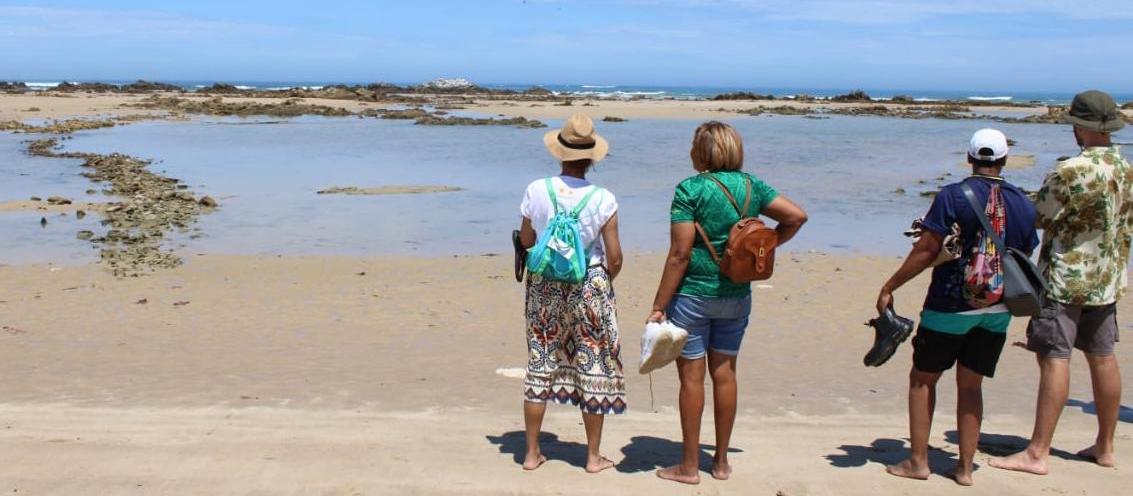
First Nation leaders looking at the fish traps at Cape Recife.
The group also included Dr Paula Pattrick, who in 2022 assessed the ecological functioning of one of the Cape Recife fish traps, from a fish larval perspective, in collaboration with Prof Francesca Porri (SAIAB), Prof Minguzzi and Chief Maleiba from the Damasonqua tribe.
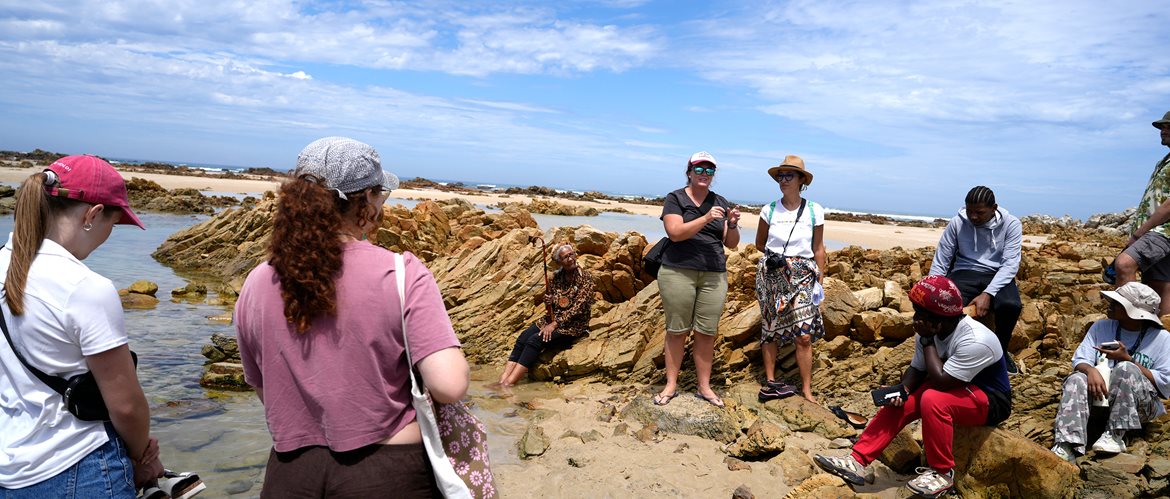
Dr Paula Pattrick explaining the importance of the fish traps as sustainable infrastructure for the coastal ecosystems.
Dr Pattrick shared her findings, which demonstrated that the fish traps continue to function as meaningful microhabitats, like an incubator, even in the absence of active use.
This year, the site visit was organised during the same week as the commemoration of the passing of Diana Ferrus, a beloved South African poet, writer, and activist who passed away on January 30, 2026.
Dr Ferrus was a pivotal figure in the repatriation of Sarah Baartman from France to South Africa. Her 1998 poem, “I’ve Come to Take You Home,” is widely credited as a catalyst for this movement, influencing the French Senate to pass legislation in 2002 that enabled the return of Baartman’s remains, Prof Minguzzi said.
During the visit to Cape Recife, Chief Margaret Coetzee, one of the Khoikhoi leaders present read the poem, after the group observed a minute of silence.
.jpg)
news.mandela.ac.za
news.mandela.ac.za
