
Housing activists march to the Tafelberg site in Sea Point following the ConCourt ruling declaring the sale of the property unlawful.
- The Constitutional Court has ruled that the Western Cape government and the City of Cape Town failed their constitutional obligations to address apartheid-era spatial inequality.
- The court declared the province’s 2015 sale of the Tafelberg site in Sea Point to a private school for R135 million unlawful, finding it denied lower-income residents access to well-located land.
- In a unanimous judgment, Justice Mandisa Mhlantla found that housing location is a critical component of the constitutional right to adequate housing, requiring government to provide affordable options in opportunity-rich areas.
The Constitutional Court has ruled that the Western Cape government and the City of Cape Town failed to meet their constitutional obligations to address apartheid-era spatial inequality, and has declared the province’s sale of its Tafelberg site in Sea Point as unlawful.
In a landmark judgment handed down on Thursday, the apex court found that both spheres of government had failed to comply with their constitutional duties to provide access to adequate housing and equitable access to land in well-located areas of Cape Town.
It ordered the Western Cape government to report back to the court on the steps taken to fulfil its housing obligations.
After a decade-long legal battle, the court found that the province had not adopted a coherent strategy to provide affordable housing in well-located, amenity-rich areas and that its reliance on cheaper land on the urban periphery perpetuated apartheid spatial patterns, rather than redressing them.
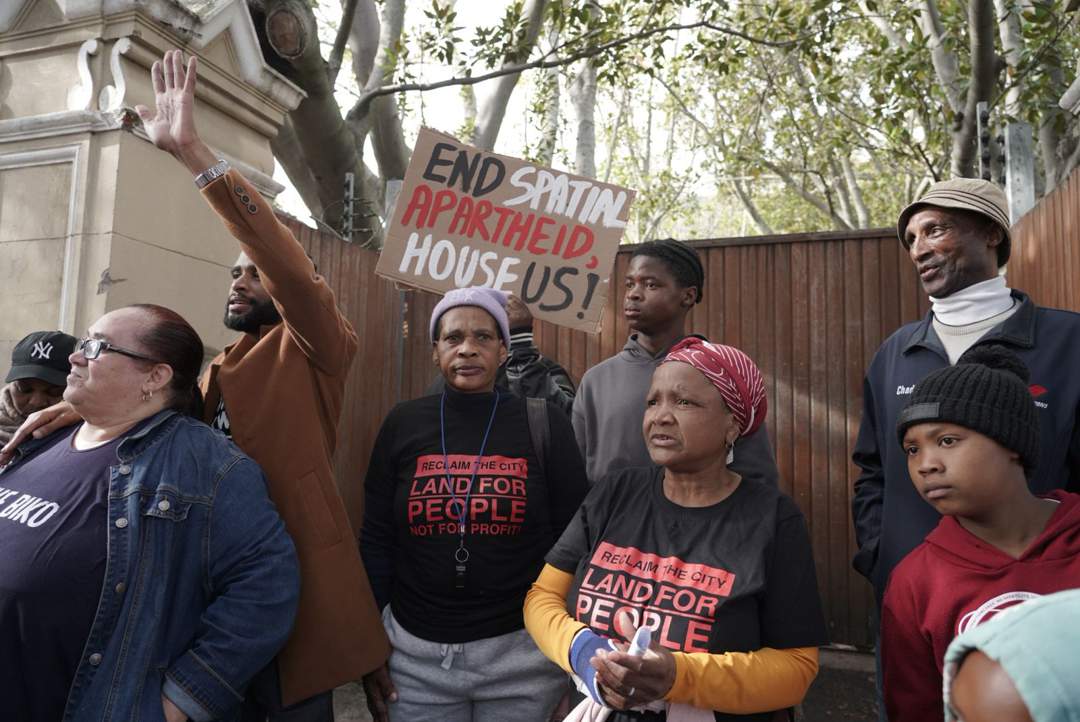
The Constitutional Court has found that the Western Cape province and the City of Cape Town did not meet its constitutional mandate to provide affordable housing in the City of Cape Town when it disposed of the Tafelberg site in Sea Point.
The case stems from the provincial government’s 2015 decision to sell the former Tafelberg School site in Sea Point to the Phyllis Jowell Jewish Day School for R135 million, rather than using the well-located public land for affordable housing.
Housing activists, led by Reclaim the City and Ndifuna Ukwazi, challenged the sale, arguing it entrenched apartheid-era spatial inequality by denying lower-income residents access to land close to jobs, schools and public transport.
The matter has wound its way through the courts for almost a decade before reaching the Constitutional Court.
In a unanimous judgment penned by Justice Mandisa Mhlantla, the Constitutional Court said the case raised “a fundamental constitutional question” about how South Africa should address “the enduring legacy of spatial apartheid”.
READ | Cape Town pushes ahead with sale of Green Point public land despite backlash
The court found that the location of housing is a critical component of the constitutional right to adequate housing and equitable access to land, and that governments are required to take reasonable measures to provide affordable housing in well-located, opportunity-rich areas, such as Cape Town’s CBD and Atlantic Seaboard.
The court declared that both the provincial government and the City had failed to comply with those constitutional obligations and ordered each to file reports within three months detailing their affordable housing policies, projects, budgets and future plans for the CBD and Sea Point.
It also found that the province had failed to conduct meaningful public participation before disposing of the Tafelberg property, and declared parts of the Western Cape Land Administration Act regulations unconstitutional because they allowed public participation only after a sale agreement had already been concluded.

Housing activists marched to the Tafelberg site in Sea Point following the court ruling.
Meanwhile, housing activists gathered at the Sea Point Methodist Church to watch the livestream of the ConCourt’s ruling.
Sheila Madikane, a housing activist, domestic worker, and leader in the social movement Reclaim the City, said the ruling comes after “a long journey”.
“I always say that we are not fighting a losing battle because we know what we want – a CBD where the poor must also live,” she said.
“We can’t be pushed out to the peripheries. We can’t be pushed out to the locations. There is no space anymore for you to stay far. We need to live here where we wake up next to our jobs — not wake up at 03:00 just to be here at 07:30. We fought this battle, and we won this battle. It was not a losing battle,” she said.
Disha Govender, attorney for the Tafelberg Matter and former head of the Ndifuna Ukwazi Law Centre, said: “When we started this case, we knew what we wanted to change. We wanted to change the segregation that we see. We wanted to change the continued spatial injustice, the continued spatial apartheid, but it was a long and hard road, and they fought us every single step of the way, but we persisted.
“This judgment is not just going to change this city and this province. It has the power to change the country,” she said.
*Editor’s note: This article has been updated with additional information.
Marvin Charles
www.news24.com
