
The 2026 Future Nation Business Challenge (FNBC) brought together learners from eight Gauteng high schools on Friday (26 June 2026) to pitch innovative business solutions addressing some of South Africa’s most pressing sustainability challenges. The showcase marked the culmination of an 18-month teacher development programme designed to embed entrepreneurship across the CAPS curriculum through Project-Based Learning (PBL).
Teaching entrepreneurs, not job seekers
The competition marked the culmination of an 18-month entrepreneurship teacher development programme delivered by Marketplace Academy and Nation NXT College (NNC), with the support of Allan & Gill Gray Philanthropies and Investec. By equipping teachers to embed entrepreneurial thinking across the CAPS curriculum, the programme is developing a new generation of young people with the confidence and capability to identify opportunities, solve complex problems and build sustainable businesses.
The programme supported seven Gauteng high schools: John Orr Engineering School of Specialisation, Katlehong Engineering School of Specialisation, Katlehong High School of Excellence, Mpilisweni Maths, Science and ICT School of Specialisation, Oosrand Commerce and Entrepreneurship School of Specialisation, Palmridge Secondary School, Soshanguve School of Specialisation and UJ Academy School of Specialisation.
Rather than teaching entrepreneurship as a standalone subject, through Project-Based learning (PBL) participating educators learnt how to integrate entrepreneurial thinking into everyday classroom practice across mathematics, science, technology, languages, Life Orientation and other CAPS subjects. Through PBL, learners investigated authentic community challenges, conducted research, collaborated with stakeholders, developed business models, built prototypes and pitched innovative solutions with genuine commercial, social and environmental value. In doing so, the programme supports the Department of Basic Education’s curriculum strengthening priorities and the Three-Stream Model by developing the entrepreneurial mindset and future-ready capabilities – such as critical thinking, creativity, collaboration and innovation – that are essential for success in a rapidly changing world.
Entrepreneurship in action
The Future Nation Business Challenge (FNBC), hosted at John Orr Engineering School of Specialisation on Friday, 26 June 2026, represented the culmination of this learning journey, providing learners with the opportunity to apply the entrepreneurial knowledge, skills and mindset they had developed by designing and pitching commercially viable solutions to authentic societal challenges.
To broaden the learning experience and encourage collaboration beyond the participating programme schools, Future Nation Schools Fleurhof and Future Nation Schools Lyndhurst – internationally recognised for their established PBL model – were invited to participate in the FNBC alongside the seven programme schools. Their inclusion created an opportunity for learners to exchange ideas, learn from one another and showcase different applications of entrepreneurial thinking through PBL.
Young innovators rise to the challenge
This year’s challenge used South Africa’s Just Energy Transition (JET) mandate as the entrepreneurial context. Learners were tasked with identifying unmet community needs and developing innovative, commercially viable business solutions that create economic opportunity while delivering measurable social and environmental impact.
Following months of classroom-based learning, research, collaboration and solution development, learner teams presented their concepts to an independent judging panel, which assessed each project on innovation, feasibility, commercial viability, sustainability and potential community impact.
Chantyl Mulder, CEO of Marketplace Academy, believes the programme demonstrates how entrepreneurship education can become a powerful catalyst for sustainable development.
“South Africa’s greatest renewable resource is not sunlight or wind – it is the ingenuity of its young people. Our responsibility is to create classrooms where that ingenuity can flourish. When entrepreneurship is embedded through Project-Based Learning, learners don’t simply study society’s challenges; they begin designing sustainable solutions to solve them. The Future Nation Business Challenge is proof that, given the opportunity, young South Africans can think like innovators, entrepreneurs and responsible citizens long before they enter the world of work.”
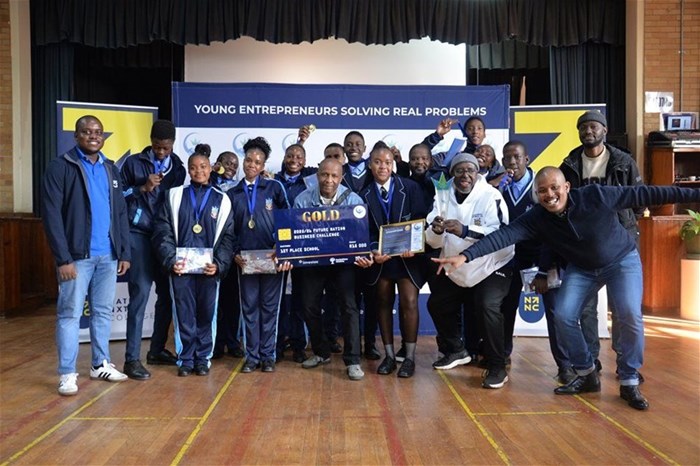
Learners from Soshanguve School of Specialisation emerged as the overall winner with an entrepreneurial solution that reimagined sustainable water access through renewable energy. The project showcased how innovation and commercial thinking can be applied to address one of the community’s most pressing challenges. In addition to a trophy and learner medals, the school received R15,000 to further develop the concept.
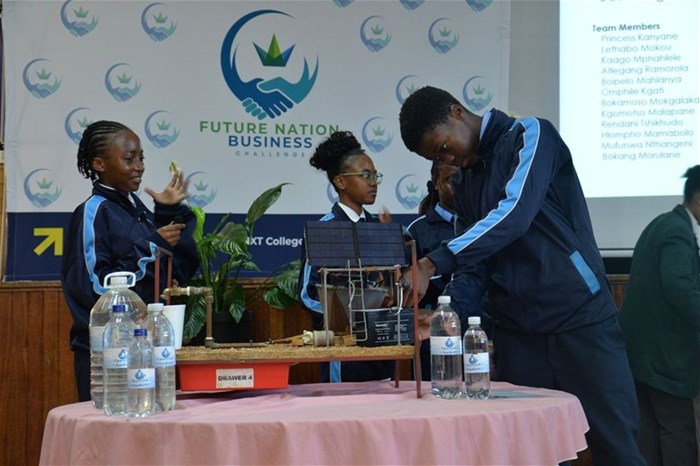
Future Nation Schools Lyndhurst claimed second place (R10,000) with an innovative smart solar energy storage solution that explored renewable energy, circular resource use and sustainable innovation. The project demonstrated how entrepreneurial thinking can unlock practical solutions that create both economic opportunity and environmental value.
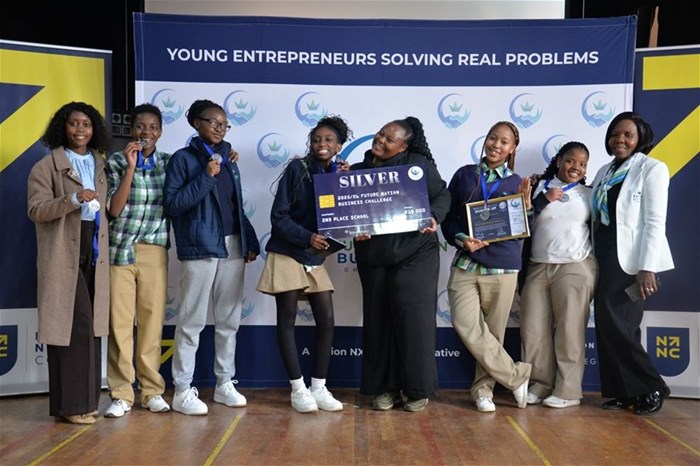
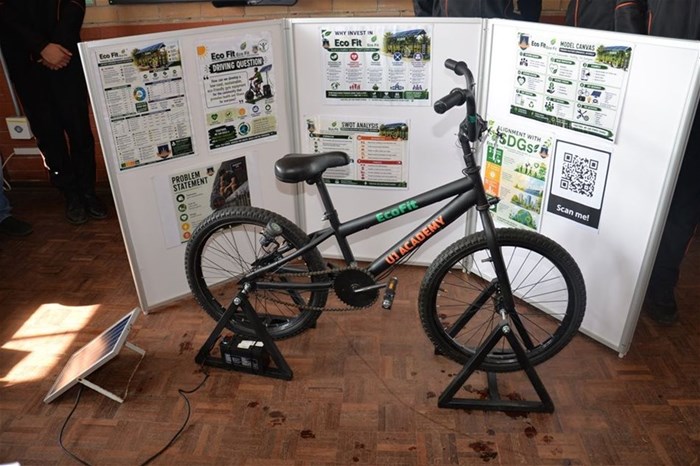
Third place was awarded to UJ Academy School of Specialisation for developing an innovative health and fitness solution using a fitness bicycle capable of generating electricity, which could be fed back into the energy grid. By combining renewable energy with accessible community fitness infrastructure, the learners showcased how innovation can simultaneously promote healthier communities and environmental sustainability. The school received R5,000.
Additional category awards recognised outstanding innovation across the competition. Palmridge Secondary School received the Green Builders of Tomorrow Award, Future Nation Schools Fleurhof received the Guardians of the Future Award and UJ Academy School of Specialisation received the Energy Custodians of the Nation Award.
But the real success started long before the competition
Dr Sizwe Nxasana, CEO of Nation NXT College, said the competition demonstrates the transformative impact of investing in teachers first.
“The Future Nation Business Challenge is much more than a competition. It is the culmination of months of classroom learning where entrepreneurship has been embedded into everyday teaching through Project-Based Learning. Instead of learning about entrepreneurship from a textbook, learners experience it by identifying authentic community challenges, collaborating across disciplines and developing innovative solutions with genuine commercial and social potential. That is the kind of learning that prepares young people not simply for employment, but for leadership, innovation and entrepreneurship.”
As South Africa continues to navigate the challenges of unemployment, sustainability and economic transformation, programmes such as this demonstrate that entrepreneurship education is no longer about preparing learners for the future. It is about empowering them to shape it.
Bizcommunity
www.bizcommunity.com
