
We spent time last week engaging with agribusinesses and farmers in the Western Cape. The primary agricultural focus of the province is various fruits, citrus, table grapes, wine, wheat, barley, livestock, and aquaculture, among many value chains.
Each of these commodities faces its own challenges and exciting developments. On wheat, for example, the 2025-26 season was challenging, with higher input costs and lower wheat prices; thus, farmers have been calling for an increase in the wheat import tariff. The industry’s profitability is under pressure.
In table grapes, port inefficiencies proved costly for the industry at the end of 225 and the start of this year.
The citrus industry struggled with U.S. tariff challenges, but is now getting a breather as tariffs have been lowered to 10%.
The wine industry also struggled with higher tariffs in the U.S. and with slow progress in trade negotiations that would help it gain a larger share of exports to China and other Asian markets, supporting growth.
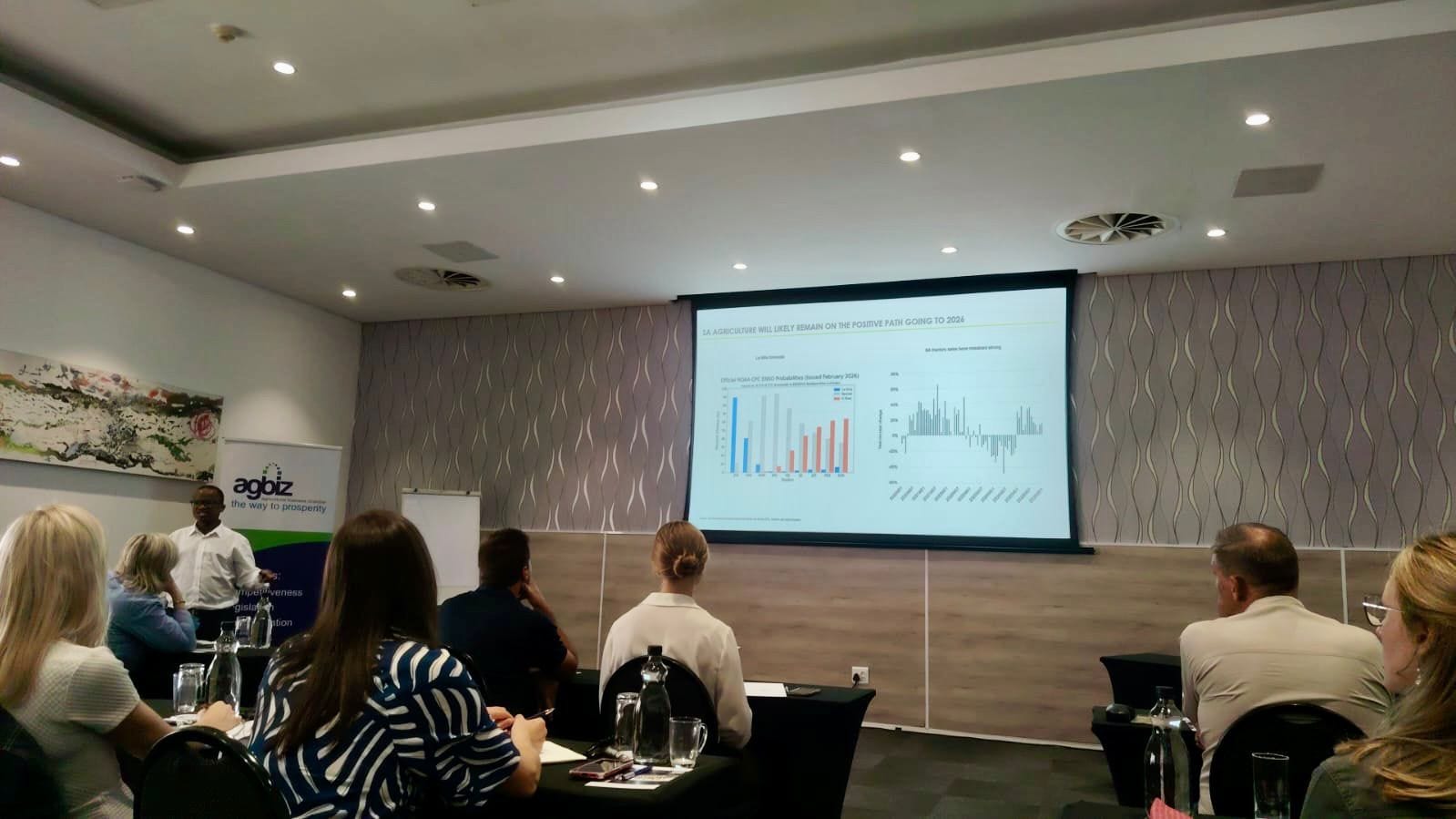
But if we step back from these issues and reflect on a broader sectoral performance, my broad message in the meetings was that it is continuing its recovery, though unevenly.
The cattle industry continues to struggle with foot-and-mouth disease. The effectiveness of the vaccination process, which should gain momentum soon, will be the major determinant of whether we can see evenly spread growth or recovery in the agricultural sector this year. For now, it appears that the cattle industry will be under financial pressure for some time.
The pig industry is also under financial strain as the African swine fever remains a challenge. This hasn’t been discussed much in the news, but various regions of the country struggle with it.
I must stress that when I talk about continuing a recovery, I mean building on the gains of 2025.
On Tuesday, March 10, 2026, Statistics South Africa will release the Gross Domestic Product (GDP) data for the last quarter of 2025. In these data, the gross value figure for agriculture will likely show some recovery, notwithstanding the challenges I mentioned above in the livestock industry.
Field crops and horticulture are expected to power strong agricultural growth in 2025, while the cattle industry struggled with higher feed costs at the start of the year and the spread of foot-and-mouth disease. It is because of such performance disparities that we termed 2025 an uneven recovery in South Africa’s agriculture.
It is for the excellent production conditions in field crops (grains, oilseeds, and sugarcane) and horticulture (fruits, wine, and vegetables) that boosted South Africa’s agricultural exports to a record US$15.1 billion, up 10% from 2024.
These broadly healthy farming fortunes of 2025 also extended to the interlinked industries. For example, South Africa’s tractor sales totalled 7,668 units in 2025, up 19% from 2024, and combine harvester sales totalled 207 units, up 3% from the previous year.
So where are we today?
Since the start of the current 2025-26 production season, we have continued to receive the excellent La Niña rains, which have supported crop conditions and the grazing veld across the country.
We now have the first production estimate for the 2025-26 summer grains and oilseeds season, at 19.82 million tonnes. While this is 3% less than the 2024-25 season, it remains an encouraging estimate. We must not forget that the 2024-25 summer grains and oilseeds were the second-largest on record; therefore, being marginally lower than they were is not cause for concern.
The favourable rainfall has also supported production conditions for various fruits, vegetables, and grazing veld. So, while we typically highlight grain production, the benefits of excellent rainfall extend beyond that.
The Western Cape is about to start its winter crop season at the end of April. These are mainly wheat, barley, canola and oats, amongst other crops. Therefore, to them, the weather outlook remains a primary focus.
Thus, I had to highlight that we are at the tail end of the 2025-026 La Niña rainfall period. From April 2026, the weather is likely to return to normal, and later to an El Niño.
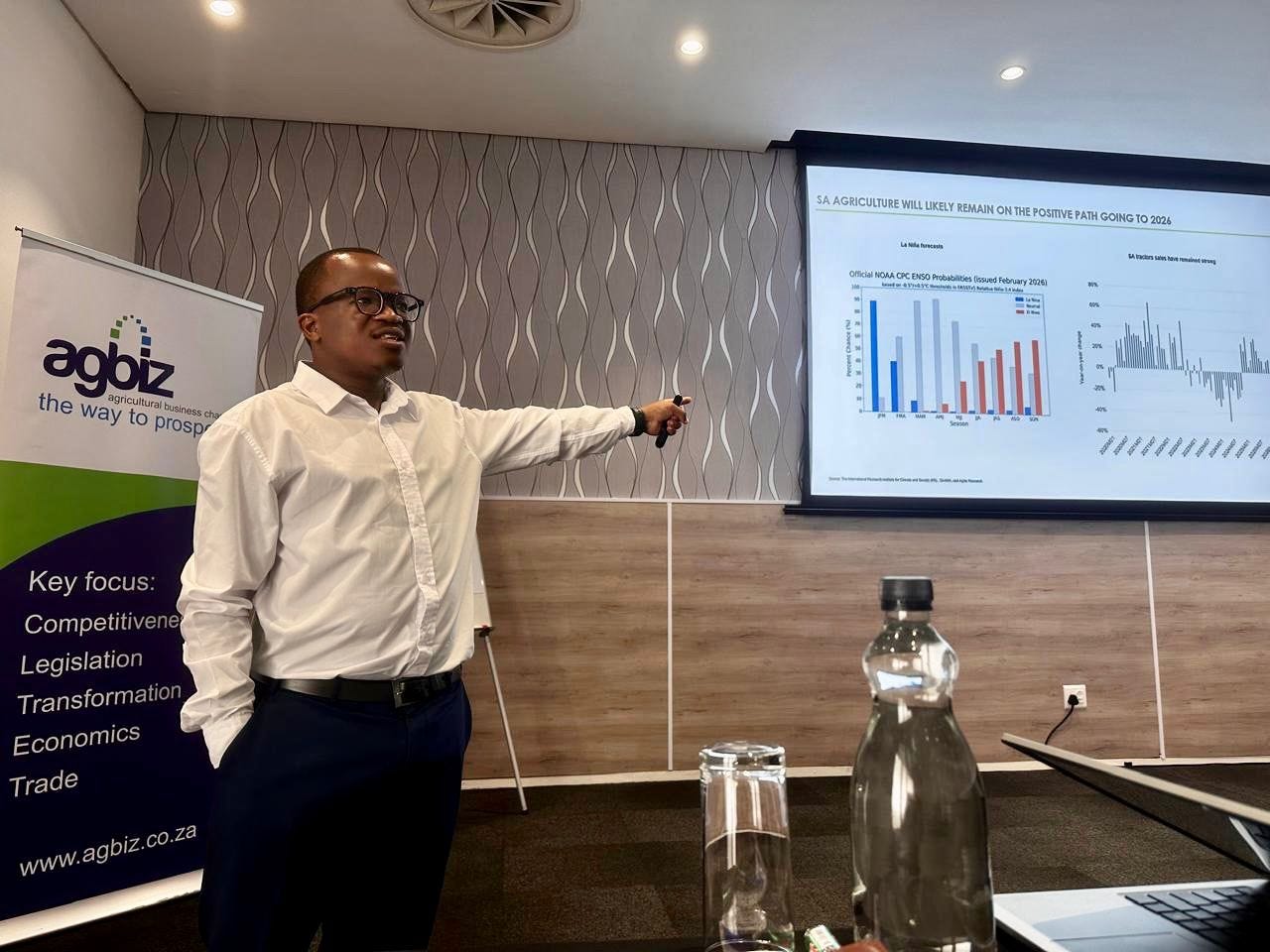
But this doesn’t change the rainfall prospects for the Western Cape; the region will likely have a fair winter season.
The transition to El Niño will matter for the 2026-27 summer crop season. While it is still early to take a firm view, if this becomes a reality, we may have a tough season ahead after a few years of favourable weather conditions. Again, this is still very early; we will likely have a clearer view of this possibility around July 2026.
For now, what remains comforting is that weather conditions are favourable for the current 2025-26 season, and the rain may ease at the end of this month, permitting better summer crop maturation.
The winter crop season should start fairly, and the rainy winter will benefit the Western Cape region.
All things considered, the major challenge in agriculture right now is foot-and-mouth disease.
We are also learning the implications of the Middle East conflict, which could present challenges for our fruit, wine, grains, and beef exports.
There are also implications for input costs, particularly fertiliser and fuel prices, if the conflict continues for some time.
Overall, the mood in the meeting was upbeat, and people expressed frustration about the Cape Town port issues, which proved immensely costly for table grape, wine, and other fruit exporters in the period between November 2025 and February 2026.
But there are now interventions to improve operating conditions, and Transnet’s leadership sees the need for better cooperation with stakeholders to improve the port’s efficiency.
Wandile Sihlobo
wandile.substack.com
