
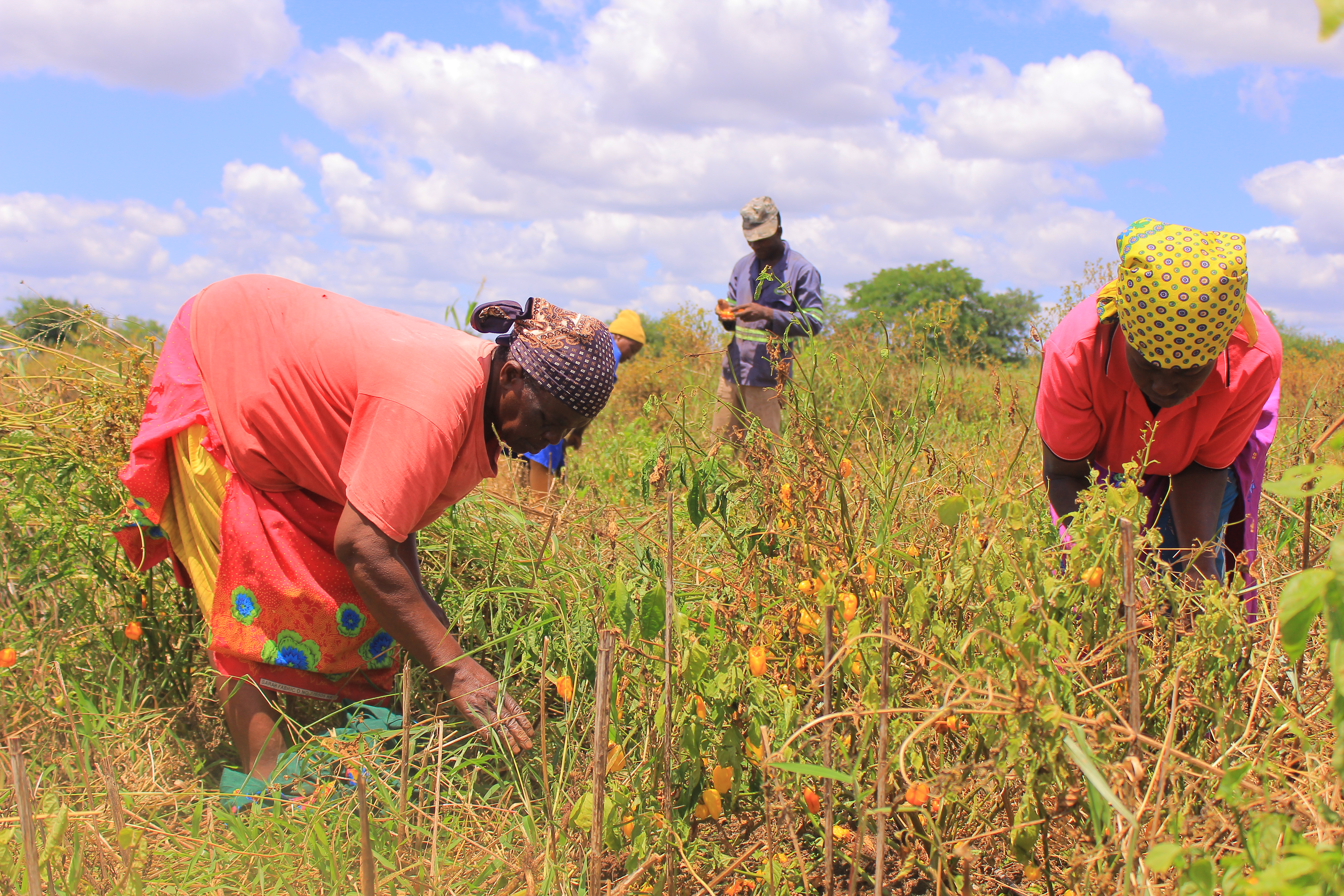
Small-scale farmers in Mopani, Limpopo sort through what remains of their damaged crops after they were damaged or washed away by flooding last month. Photos: Thembi Siaga
- Many small-scale farmers in the Mopani district in Limpopo say they are battling to feed their families after their crops washed away in the Limpopo floods last month.
- One farming cooperative estimates their losses to be up to R350,000.
- Maria Mathoko says two of her seven children helped support the family by selling vegetables grown on the farm. But since the floods, the family has had no income and relies solely on Mathoko’s pension.
- Farmers are criticising the government’s slow response and the lack of financial support to help get people back on their feet.
As water levels subside across communities hardest hit by flooding in Limpopo, small-scale farmers in the Mopani district are battling to put food on the table after many of their crops were washed away. A farming co-operative in Mopani estimates their losses to be up to R350,000.
Unlike commercial farmers, many of the small-scale farmers do not have insurance that covers climate-related disasters, such as floods.
For small-scale farmer Maria Mathoko from Mopani, the floods left her without an income her family desperately depends on.
Mathoko said she started farming in 1984. She now farms on a piece of land with her children and grandchildren. Two of her seven children help support the family through income they receive from selling produce grown on the farm.
“It’s very hard because we have been working on this farm all my life,” she said.
They grow tomatoes, okra, cabbage, baby marrow, chilly, cucumber, and spinach.
She said her family have been trying to sell the vegetables they were able to salvage after the floods but with little success.
“We are struggling because the SASSA grant money is too little, and I have one child who is still at university,” she said.
Mathoko said she and other farmers have tried to plough again, but the tractors are still struggling to get through. “We have families to take care of. We are hoping the government will assist us.”
Farmers we spoke to in Mopani said they still could not reach their fields to assess the full extent of their losses because roads and bridges have been washed away or damaged.
Mopani Farmers Association Agroecology Hub estimates their members lost about R20,000 worth of produce and infrastructure damage. The harvest season for farmers in this region started in December and was expected to continue until March.
Before the floods, the cooperative earned extra income by ploughing for community members, charging R450 per stand or R1,650 per hectare.
The cooperative’s members told us that their members not only lost produce to sell, but also food to feed their families. Two solar-powered systems, two water tanks, and a shack housing tractors were damaged or destroyed. Just before the floods, a tractor had been repaired using the cooperative’s savings, which are now depleted.
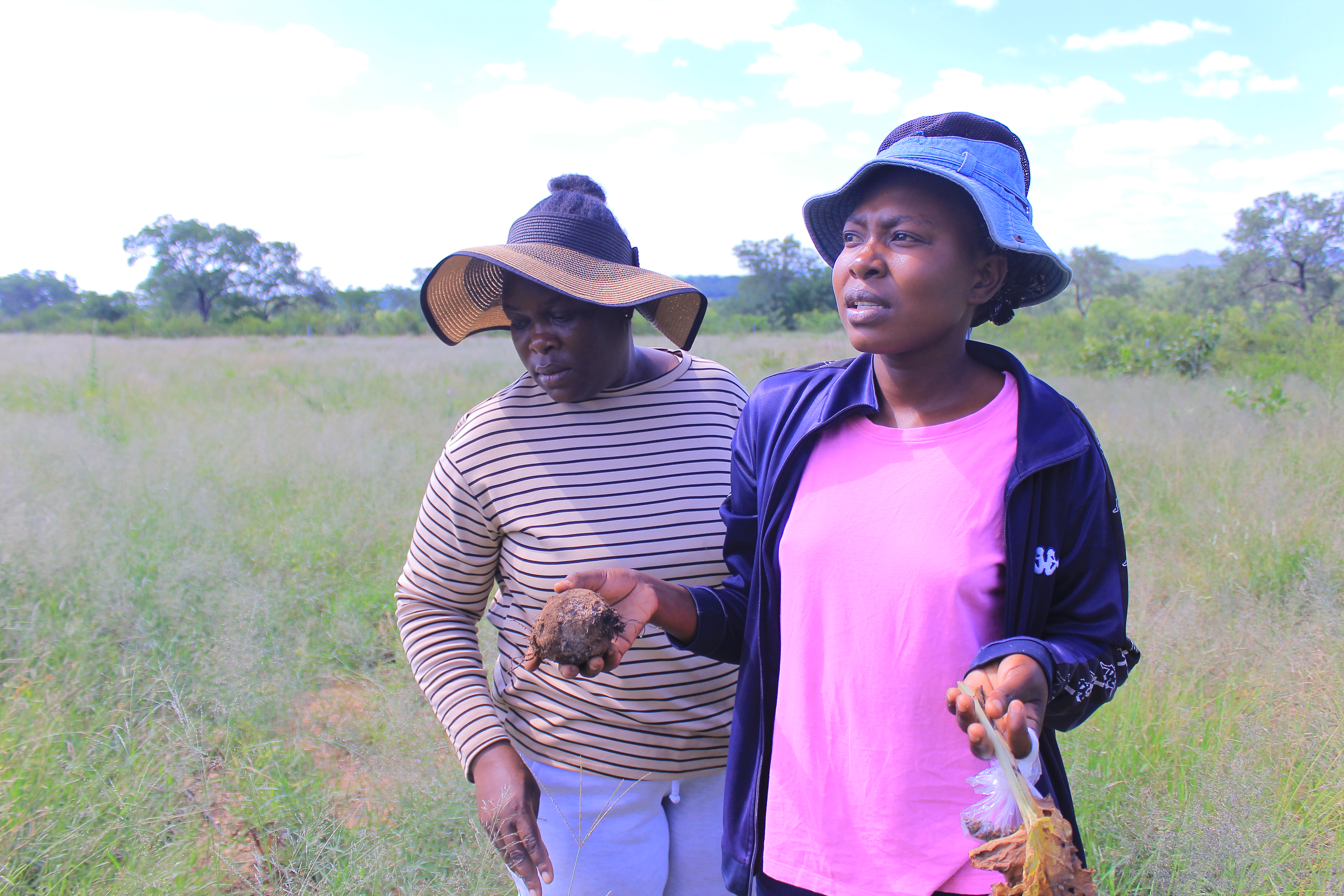
Farm workers from the Mopani Farmers Association’s (MFA) Agroecology Hub, Vukosi Makhubele (left) and Nxalati Mbowan (right) remove rotten beetroot from fields where overgrown bushes took hold after the land became waterlogged and inaccessible.
The farmers say the recent floods reminded them of the disaster in 2000. It took at least five years to recover then, also due to the lack of government assistance.
Farmers at the Ahi Tirheni Ntsweka cooperative near Giyani told GroundUp that seven members, three women and four men, lost an estimated R350,000 across 30 hectares.
In a statement, the Trust for Community Outreach and Education, supported by the Rural Women’s Assembly, and the Inyanda National Land Movement expressed solidarity with affected farmers, informal traders, and rural households.
Farmer Norah Mlondobozi is a coordinator at the Rural Women’s Assembly and secretary of the Mopani Farmers Association. She said the Mopani district had been experiencing heavy rains since mid-December.
“By January, the soil was already saturated and riverbanks full of water. Women small-scale farmers have lost their crops and topsoil. Pump machines have been washed away, and electric motors used to pump water from boreholes were immersed in water. We are not sure if they will be functional after this.”
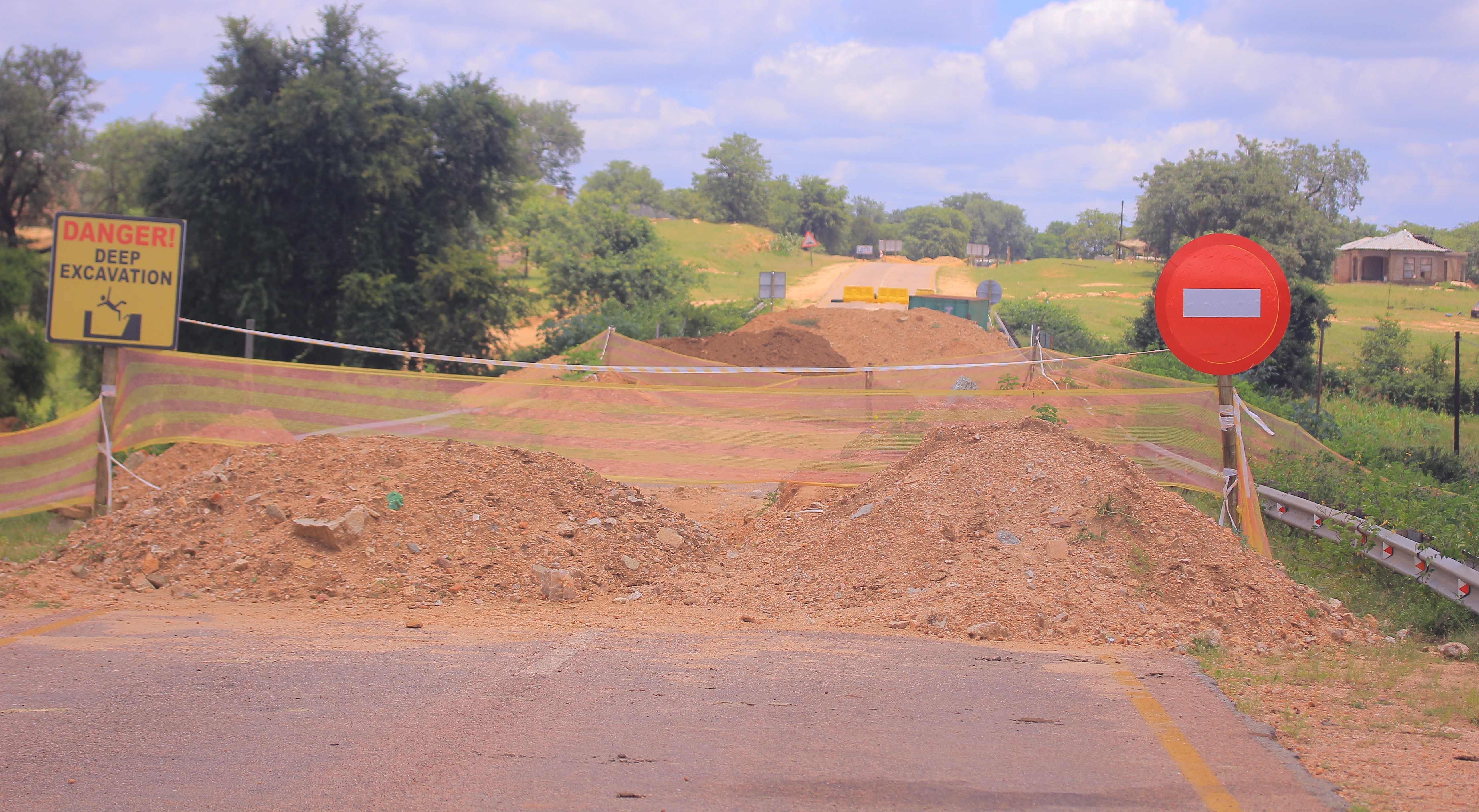
One of the bridges damaged by flooding in Mopani remains closed, leaving farmers unable to access their farms.
Mlondobozi said their organisation submitted a list of affected farmers to the government but were still waiting for assistance.
“We need climate-resilient disaster management plans developed with affected communities,” Mlondobozi said. “Government must invest in rural roads, drainage, dams, and housing that can withstand extreme weather, and provide compensation and insurance for small-scale farmers and informal traders.
“Africa contributes less than 4% to global greenhouse gas emissions, yet it is the most vulnerable. The poor and the Global South cannot keep paying the price for these disasters.”
Limpopo Department of Agriculture and Rural Development spokesperson Moshupologo Mothotse said 117 of the 250 registered farmers affected by flooding were in Mopani.
She said the department is “engaging flood-affected farmers to determine the appropriate support and relief measures”.
© 2026 GroundUp. This article is licensed under a Creative Commons Attribution-NoDerivatives 4.0 International License.
You may republish this article, so long as you credit the authors and GroundUp, and do not change the text. Please include a link back to the original article.
We put an invisible pixel in the article so that we can count traffic to republishers. All analytics tools are solely on our servers. We do not give our logs to any third party. Logs are deleted after two weeks. We do not use any IP address identifying information except to count regional traffic. We are solely interested in counting hits, not tracking users. If you republish, please do not delete the invisible pixel.
By Thembi Siaga
groundup.org.za
